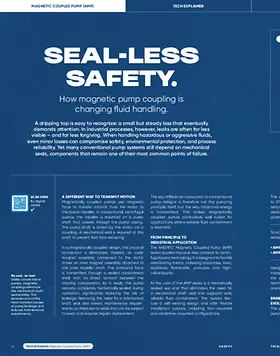
Cornell Beyrow
Industry Director General Industries, ANDRITZ Pumps

A dripping tap is easy to recognize: a small but steady loss that eventually demands attention. In industrial processes, however, leaks are often far less visible – and far less forgiving. When handling hazardous or aggressive fluids, even minor losses can compromise safety, environmental protection, and process reliability. Yet many conventional pump systems still depend on mechanical seals, components that remain one of their most common points of failure.
Magnetically coupled pumps use magnetic force to transfer rotation from the motor to the pump impeller. In conventional centrifugal pumps, the impeller is mounted on a pump shaft that passes through the pump casing. The pump shaft is driven by the motor via a coupling. A mechanical seal is required at this point to prevent fluid from escaping.
In a magnetically coupled design, this physical connection is eliminated. Instead, an outer magnet assembly connected to the motor drives an inner magnet assembly attached to the inner impeller shaft. The rotational force is transmitted through a sealed containment shell, with no direct contact between the rotating components.
As a result, the pump remains completely hermetically sealed during operation, significantly reducing the risk of leakage. Removing the need for a mechanical shaft seal also lowers maintenance requirements, as there are no seals that can be subject to wear and requiring regular replacement.
The key difference compared to conventional pump designs is therefore not the pumping principle itself, but the way rotational energy is transmitted. This makes magnetically coupled pumps particularly well suited for applications where reliable fluid containment is essential.
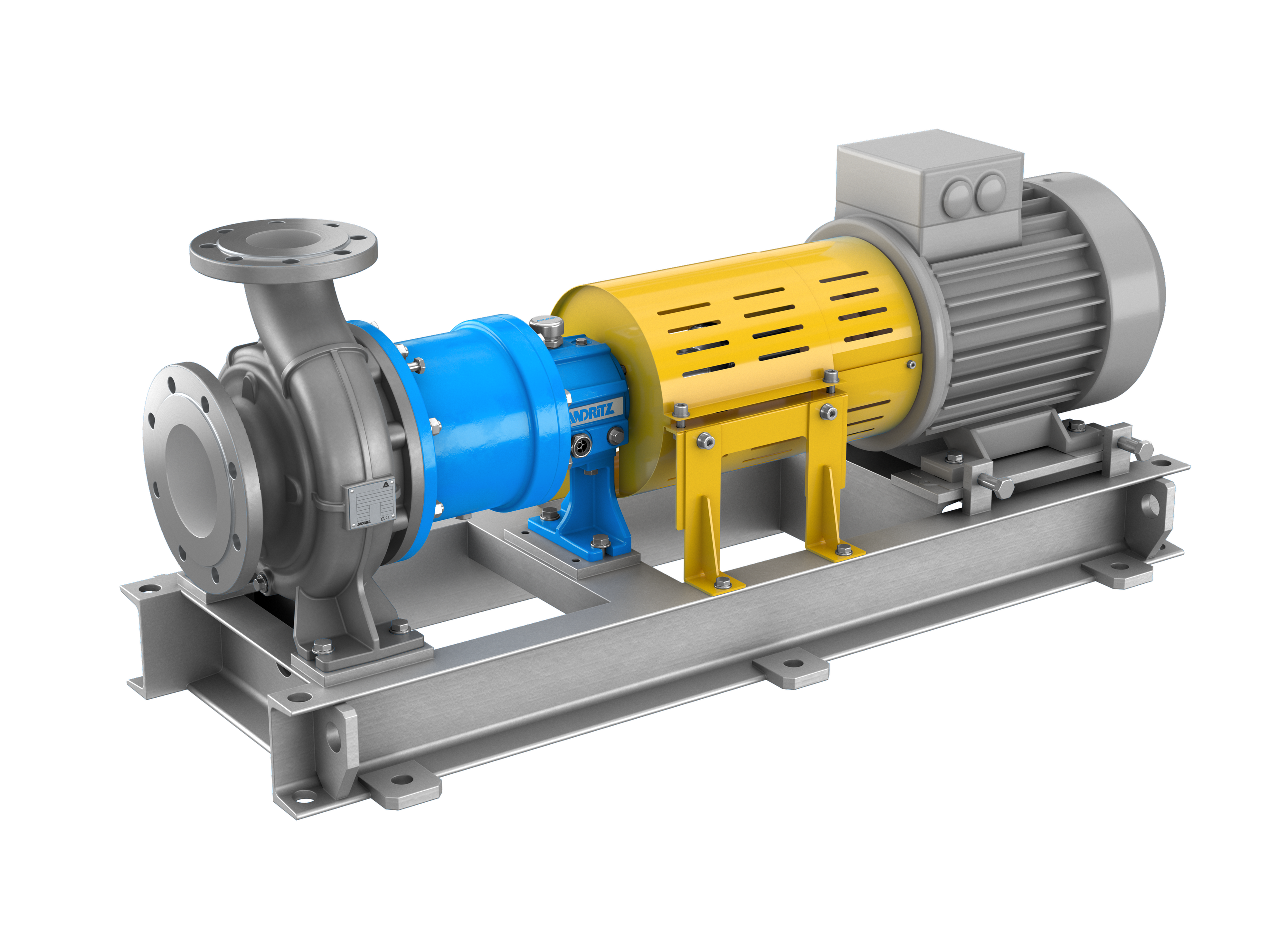
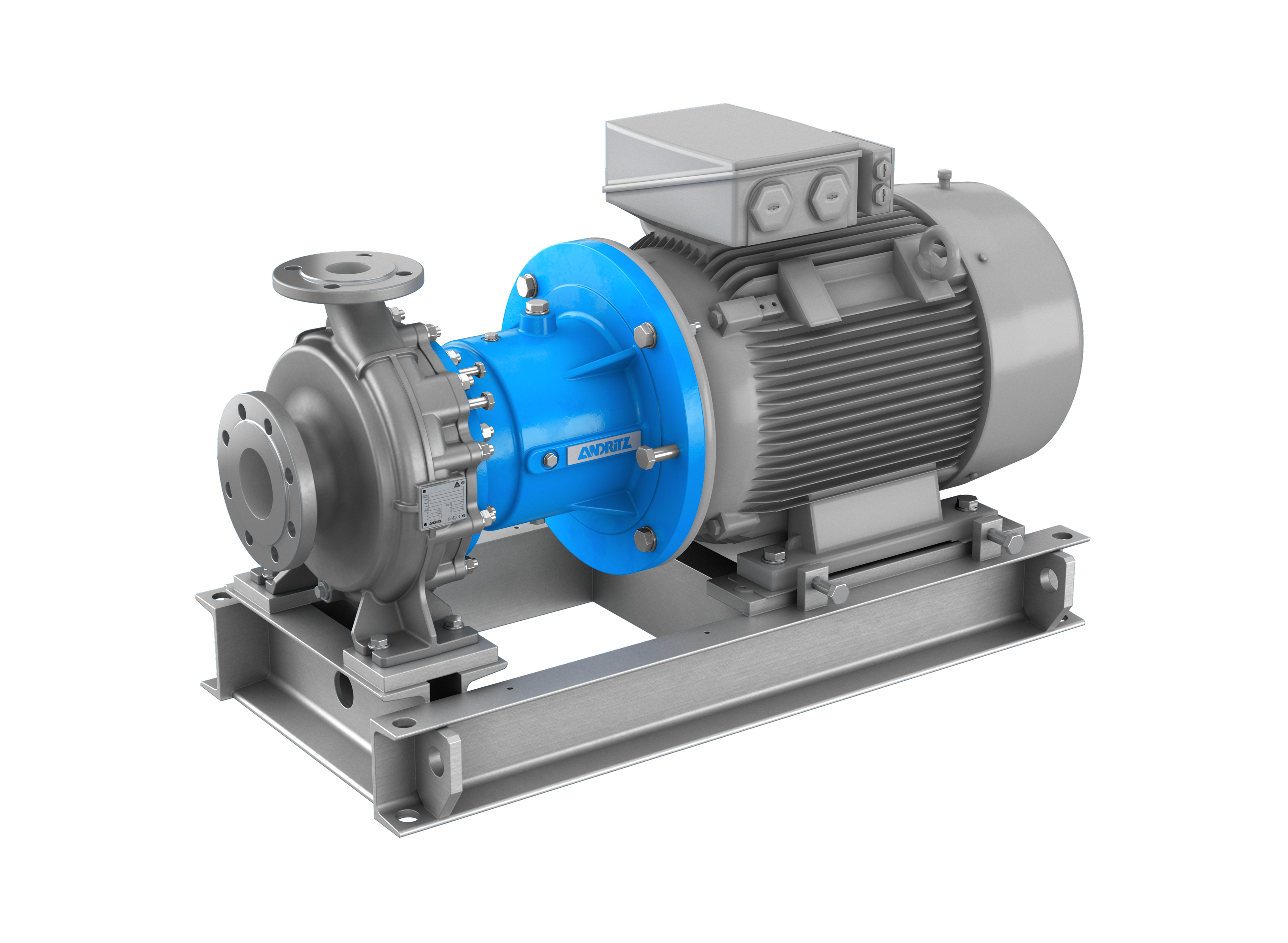
The ANDRITZ Magnetic Coupled Pump (AMP) series applies this seal-less concept to centrifugal pump technology. It is designed to handle demanding media, including hazardous, toxic, explosive, flammable, corrosive, and high-value liquids.
At the core of the AMP series is a hermetically sealed wet end that eliminates the need for a mechanical shaft seal and supports safe, reliable fluid containment. The pumps feature a self-venting design and offer flexible installation options, including foot-mounted and centerline-mounted configurations.
The product range covers flow rates of up to 375 m³/h, heads of up to 155 m, and fluid temperatures of up to 180 °C. ATEX-certified versions are available for operation in potentially explosive environments.
Designed for industrial applications where safe transportation of aggressive media is critical, the AMP series helps protect both equipment and personnel while supporting reliable process performance.
The primary benefit of magnetically coupled pump technology is the reduction of leakage risks. In processes involving hazardous, environmentally sensitive, or valuable fluids, hermetically sealed systems help prevent emissions, reduce product losses, and improve overall operational safety.
This is particularly relevant in emerging industries such as the hydrogen sector, where fluids must be handled under demanding operating conditions and strict safety requirements. Reliable pump technology plays a vital role in ensuring the safe and efficient operation of these processes. While suitable for a variety of applications, the pump includes a specialized configuration for alkaline electrolysis that has been rigorously tested and proven for hydrogen applications.
By combining a seal-less design with proven centrifugal pump technology, solutions such as the ANDRITZ AMP series contribute to safer industrial operations. They help protect people, assets, and the environment while enabling operators to handle challenging media with greater confidence.
Our engineered pumps are operating in various industrial applications successfully all over the world. They offer robustness and wear resistance and fulfill highest customer expectations in terms of efficiency, life cycle, maintenance friendliness and economic efficiency.

The 1st Shift – Technology. Transition. Trust. We are delighted to introduce you to The Shift, the new magazine from our Environment & Energy business area.

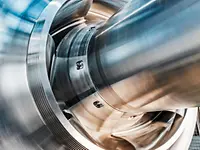
Our engineered pumps are operating in various industrial applications successfully all over the world. They offer robustness and wear resistance and fulfill highest customer expectations in terms of efficiency, life cycle, maintenance friendliness and economic efficiency.


The 1st Shift – Technology. Transition. Trust. We are delighted to introduce you to The Shift, the new magazine from our Environment & Energy business area.

Our extensive product portfolio covers a spectrum of technologies ranging from mechanical and thermal solid/liquid separation, grinding, pelletizing, pumping fluids, emission reduction technologies, carbon capture, to green hydrogen and renewable fuel production.
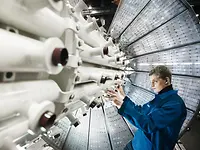
ANDRITZ Separation is the world’s leading separation specialist, with the deepest knowledge, broadest technical resources, and most comprehensive service solutions.
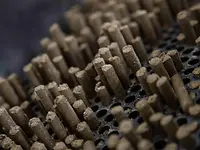
ANDRITZ offers an extensive line of equipment and complete plant solutions for the production of high-quality feed and biomass products.
Our engineered pumps are operating in various industrial applications successfully all over the world. They offer robustness and wear resistance and fulfill highest customer expectations in terms of efficiency, life cycle, maintenance friendliness and economic efficiency.
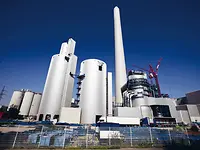
We provide you with tailor-made air pollution control solutions focusing on reduced emissions and improved performance and efficiency to meet changing market conditions and comply with asset strategies. Our offering covers the entire flue gas line, ranging from particulate control, dry and wet scrubbers, to multi-pollutant equipment for industrial, waste-to-energy and power generation plants.
ANDRITZ provides holistic and integrated P2X solutions for producing green hydrogen, e-methanol and e-ammonia.

Welcome to our Tradeshows & Events page! Here you'll find a selection of our key tradeshow participations of this year.