NOT A NEW PROBLEM, BUT A NEW KIND OF ANSWER
Drinking water crises are rarely caused by a single dramatic event. They are usually the product of years of deferred maintenance, underinvestment and ageing infrastructure, with one unexpected failure finally pushing a system past its limits. Guadeloupe's situation contained all of these pressures – and it is far from being unique. According to a UNESCO report, 2.2 billion people currently do not have access to clean water, many of them facing exactly this kind of slow-building, infrastructure-driven crisis.
ANDRITZ was already a trusted supplier to SMGEAG, having worked alongside the authority on sludge treatment equipment. Prior to the AMFU, SMGEAG had contracted ANDRITZ to supply a containerized system to dewater the sludge produced at one of its wastewater treatment plants. The Bailiff WWTP – an isolated site with only light infrastructure – was equipped with a container-mounted screw press designed to handle around 10 m³/h of municipal sludge. The efficiency and reliability of that mobile solution were proven in the field.
So, when the emergency arose, the team offered another plug-and-play solution: the ANDRITZ Mobile Filtration Unit, or AMFU for short.
Launched in 2023, the AMFU is designed to address this very challenge – offering water filtration quickly, in locations that are hard to reach or on timescales that make conventional construction impossible.
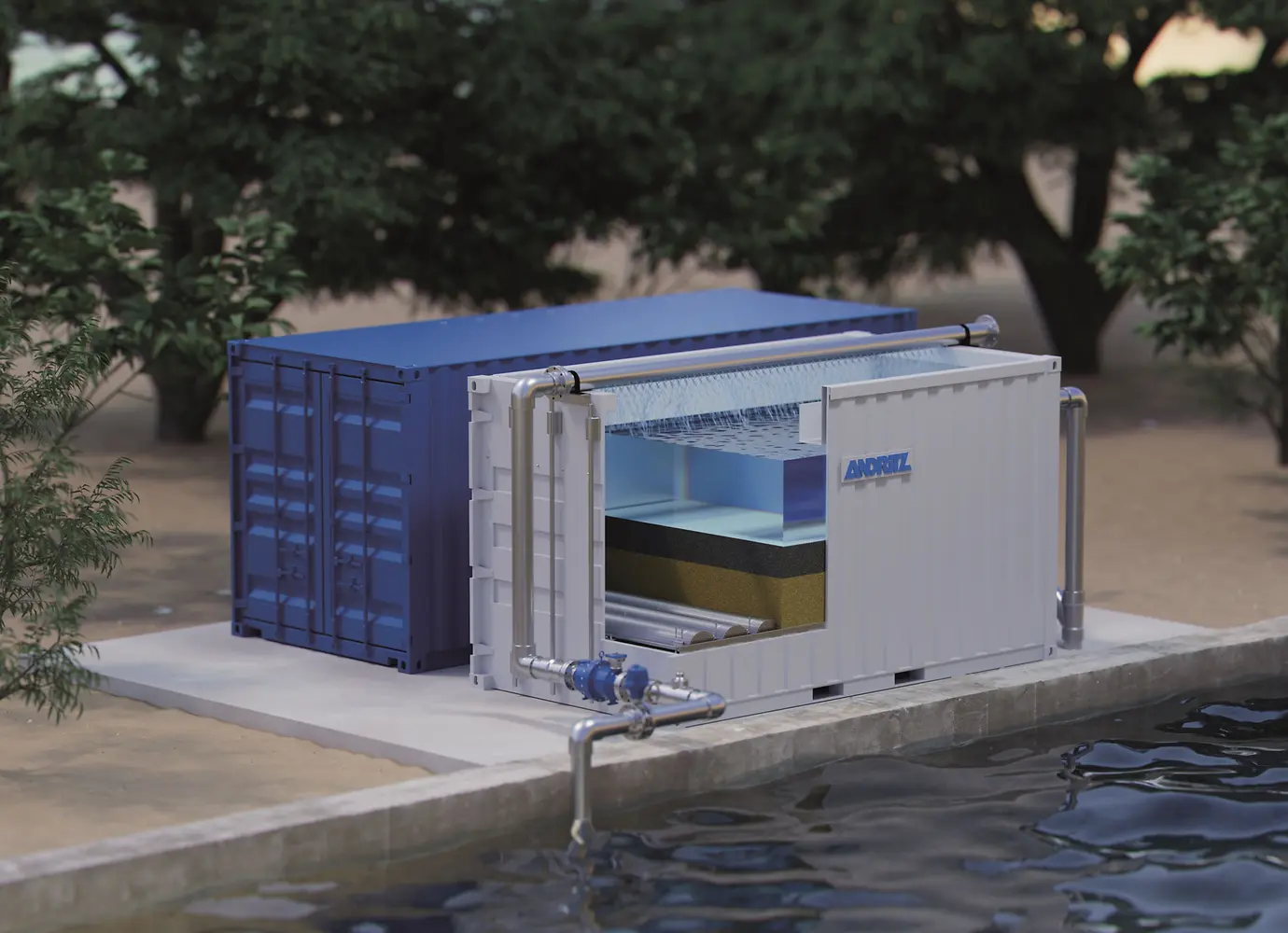
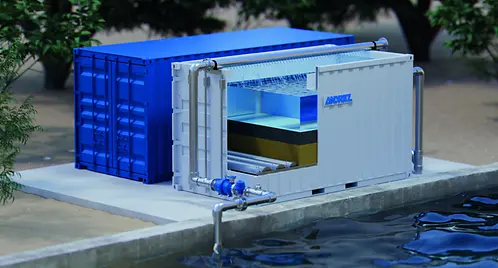
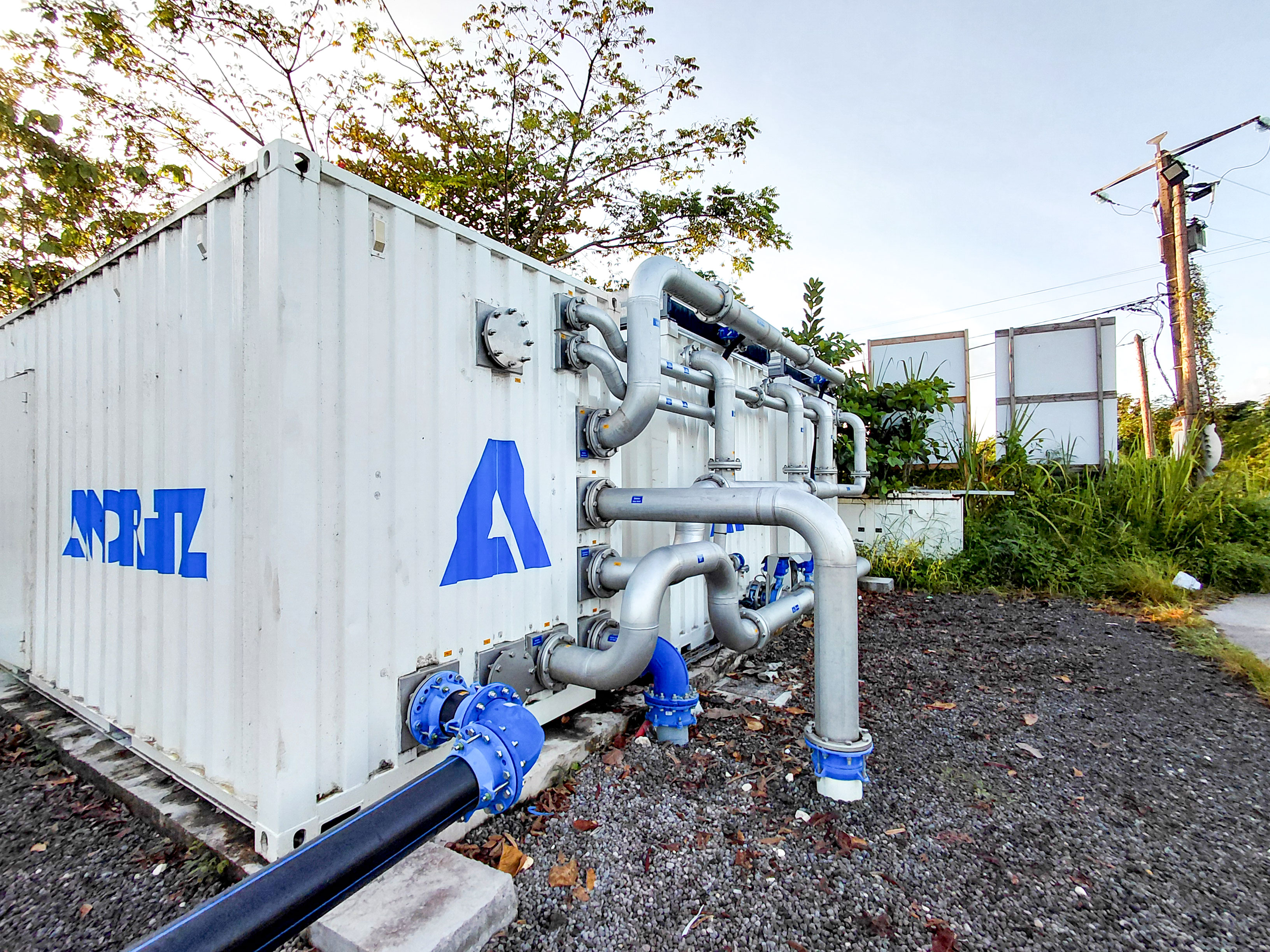
ANDRITZ's answer was to take an open gravity filter – one of the oldest and most reliable processes in water treatment – and rebuild it inside two 20-foot shipping containers, factory-assembled, factory-tested, and ready to connect.
The technology at the core is deliberately straightforward. Gravity filtration works by passing water downward through a bed of sand, activated carbon, Filtralite or other materials, and collecting the cleaned water below through an underdrain system.
Operators all over the world already know how to run gravity filters, which means a local team can take ownership quickly after a short training period. What the AMFU adds to this proven process is ANDRITZ’s own underdrain technology, stainless steel 316L construction, a fully autonomous PLC, a user-friendly control interface, and remote access to all operational data.
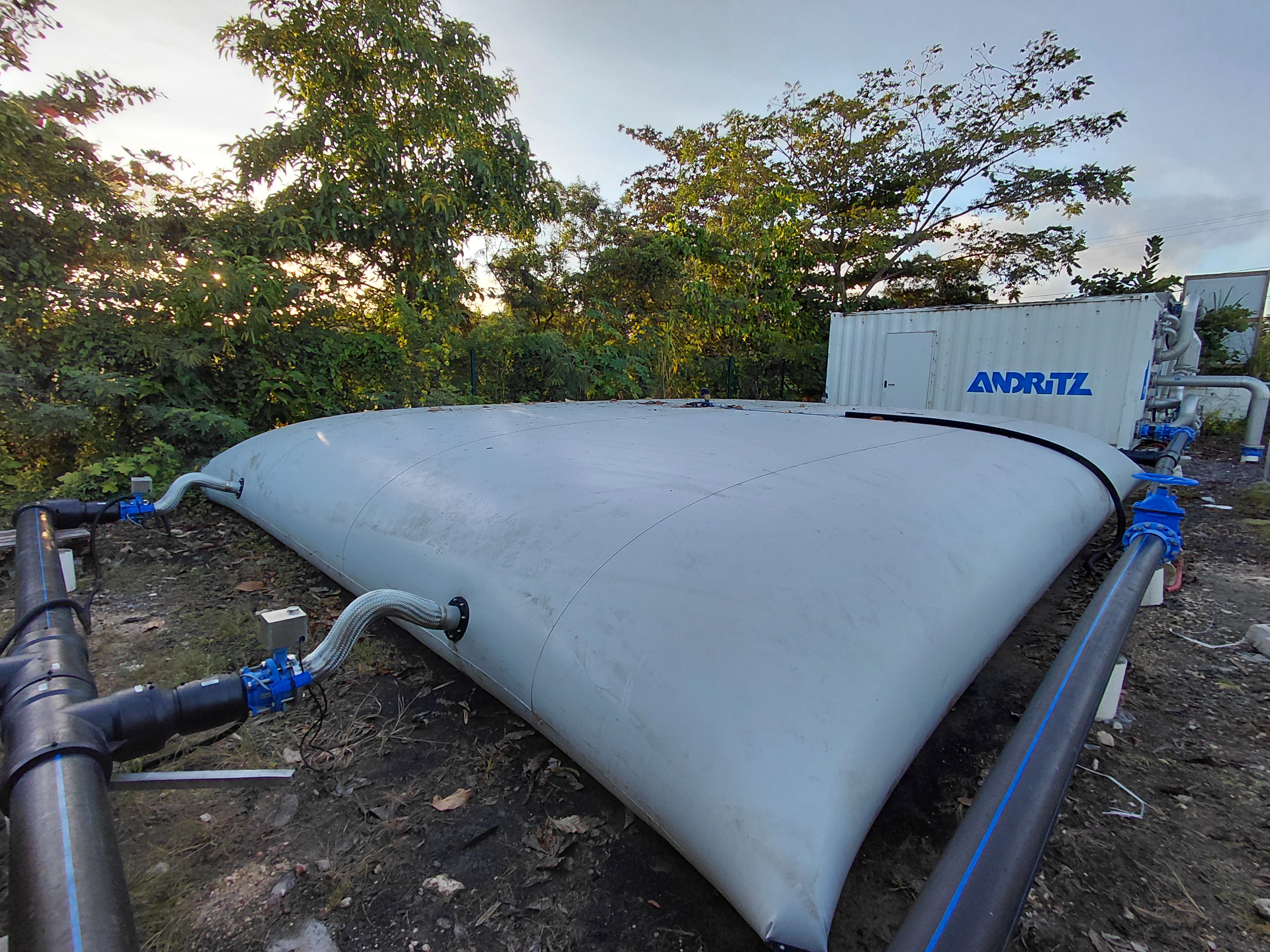
The process container completes the package with a backwash pump, air blower, dispersal ramp, chlorination system and UV disinfection. In locations without any existing downstream treatment, the two containers together constitute a complete drinking water plant. The available capacities are 50, 100 and 200 cubic meters per hour.
For Guadeloupe, the answer to the arithmetic was straightforward. One 200 m³/h AMFU would stand in for the two failed sand filters and restore the plant to its full 400 m³/h output.