Upper Wawa Installation

New dam project that’s providing a lifeline for Metro Manila

Since the 1960s, Metro Manila – the Philippines’ capital region populated by around 14 million people – has drawn the bulk of its daily water supply from a single water source, Angat Dam, some 60 kilometers to the north. While this system has served the area reliably for decades, it has also, on occasion, come uncomfortably close to failing.

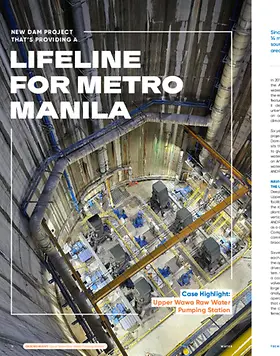
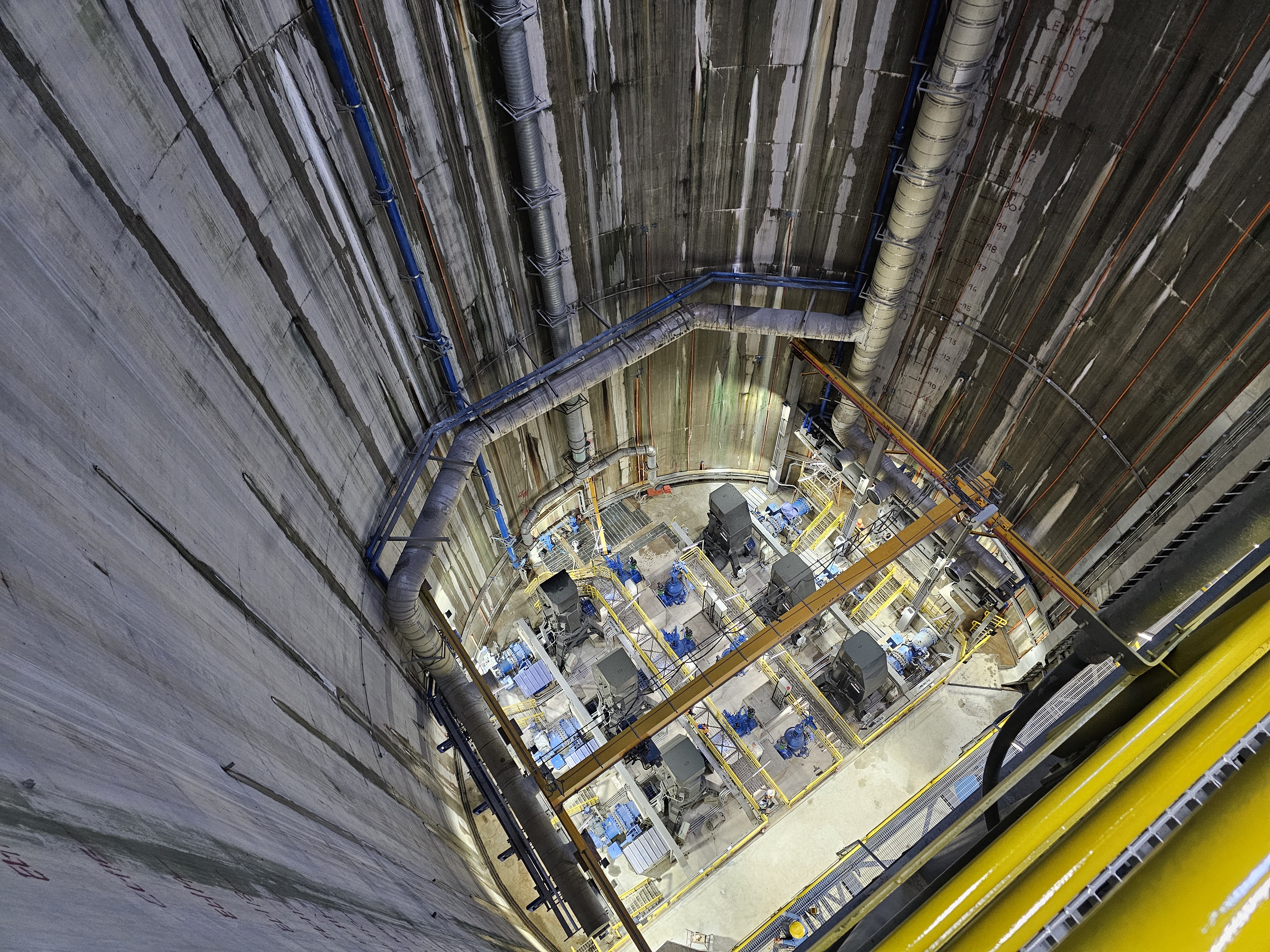
Pump station shaft view picture

Pump station shaft view picture

In 2019, an unusually severe dry season pushed the Angat Dam to critical levels and forced widespread water service interruptions across the region. While water shortages are a common feature of the dry season, the 2019 crisis made it clear that it was becoming increasingly untenable for Metro Manila to rely predominantly on one major water source, especially in a climate that is becoming less predictable.  

Six years later, in 2025, the largest water supply project the country has undertaken since Angat Dam opened in 1967 was completed. At its heart sits the Upper Wawa Dam and reservoir, built to give Metro Manila an additional major raw water source and reduce some dependence on Angat. And it’s in the movement of that raw water from reservoir to the treatment plant that ANDRITZ has played a key role. 

NAVIGATING THE COMPLEXITY OF THE UPPER WAWA PROJECT

Deep within Antipolo City sits the newly built Upper Wawa Raw Water Pumping Station, the facility designed to help lift, move, and deliver the raw water from the reservoir to a treatment plant downstream. Key to this operation are six vertical split-case pumps, built and installed by ANDRITZ.

With Prime Metro BMD Corporation as a customer for this project and Manila Water Company as the end-user, what andritz.promitted to deliver was, in scope, unusually broad and complex.  

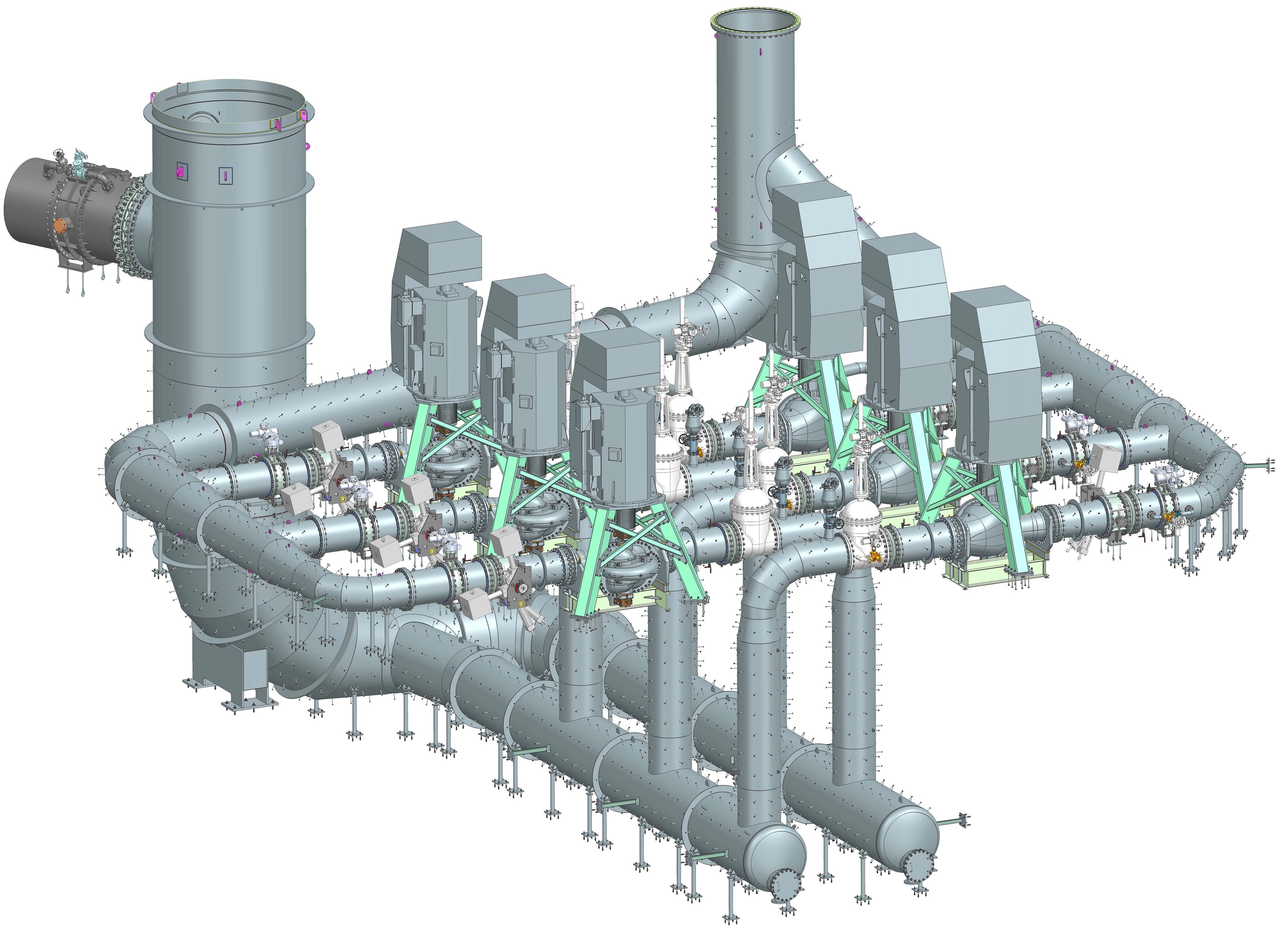
Six vertical split-case pumps from the ASP series, each driven by a 1.8 MW motor, sit at the heart of the operation, together with variable frequency drives and a full control and automation system.

Complementing these, ANDRITZ installed a complete mechanical and hydraulic scope: valves up to DN2000, more than 260 tonnes of large-diameter piping, the transient, and CFD analyses needed to guarantee stable, reliable operations across the entire system. On top of that was the structural design optimization of the concrete shell to handle the loads transferred by the vertical risers – and, culminating in the delivery, installation, commissioning and start-up on site.

Altogether, it’s been quite a feat.

“The single point of accountability makes a real difference for a customer running a project of this scale,” says Michael Jenner, ANDRITZ Project Manager “It reduces interfaces, it reduces risk, and it means the pieces are engineered to work together from day one rather than being made to fit later on.” 

Upper Wawa Installation

Upper Wawa Installation

BUILDING A PUMPING STATION 65 METERS UNDERGROUND

The technical demands of the project were shaped, above all, by geometry and geography. A pumping station built at the base of a 65-meter shaft is not exactly a typical installation. The vertical orientation, the confined space, the loads transferred into the surrounding concrete structure, and the need to guarantee reliable hydraulic performance across a wide operating range all had to be resolved together rather than sequentially.  

To do this, during the concept phase, several pump configurations were evaluated against efficiency, footprint, reliability and cost. The vertical split-case solution selected was then further refined in detailed design, with a new volute casing, motor support, and revised seal-water piping developed specifically for the project. Each pump was engineered to deliver 1.5 m³/s at heads of up to 84.7 meters, with efficiencies above 88 per cent – a critical figure for an asset that is expected to run around the clock, year after year.

The mechanical design also had to account for operating loads that are specific to vertical installations, and the factory acceptance testing was adapted accordingly with a vertical FAT carried out using the project’s own base frame, motor and torque meter. This was carried out to test performance and vibration behavior in conditions as close to real operation as possible before the pumps were shipped.

Further adding to the project's complexity were 260 tonnes of steel piping, some of it with wall thicknesses up to 30 mm, which had to be designed for transport, installation and long-term reliability, with expansion joints to absorb thermal and mechanical loads. Isolation, drainage and air valves completed the system, protecting it against hydraulic transients and providing controlled behavior under normal operation.

“The technical challenges on Upper Wawa weren’t the kind you can solve on paper alone. The depth of the shaft, the loads on the concrete structure, the way the piping had to be transported and installed – all of it required close collaboration between our mechanical, hydraulic, structural and site teams,” says Michael. 

WATER FOR HALF A MILLION HOMES - AND COUNTING

The payoff this work is substantial: now, the Upper Wawa Raw Water Pumping Station is delivering more than 518 million liters of raw water per day (MLD) to the downstream treatment plant, with an additional 259 MLD available as standby capacity. This output currently supports drinking water supply for over 500,000 households in Metro Manila. As the Wawa Bulk Water Supply Project reaches its full design capacity of 710 MLD, it’s expected to serve more than 700,000 households, or approximately 3.5 million people in Metro Manila and Rizal Province.

Additionally, the pumping station is powered entirely by renewable energy, procured through the Philippines’ Retail Competition and Open Access framework, which is firmly in line with national climate and energy goals and delivers broader environmental benefits. And the wider Upper Wawa development is designed to support flood mitigation, watershed management and long-term climate resilience for Metro Manila, alongside its primary role as a raw water source.

TURNING AMBITION INTO INFRASTRUCTURE

At its core, the Upper Wawa Dam project has been an essential step forward in strengthening water security in this part of the Philippines.

The United Nations’ Sustainable Development Goal 6 sets an objective of universal access to clean water and sanitation by 2030. In a region such as Metro Manila, where a single dry season can push a capital city’s water supply to the edge, projects like the Upper Wawa are key for realizing thesegoals.  

For ANDRITZ, Upper Wawa is a testament to a broader capability. It confirms that, as an organization, it is highly capable in taking on full engineering and delivery of a large-scale water infrastructure project – pumps, motors, drives, valves, piping, automation, hydraulic and structural analysis, installation and commissioning – as a single point of responsibility.  

For customers planning the next generation of water infrastructure, this kind of integrated capability is likely to become increasingly important. 

GETTING TECHNICAL

Vertical split-case pumps

ANDRITZ split case pumps from the ASP series can be used in various fields of applications such as power stations, pulp and paper mills, water and desalination plants. Their construction and design do not only ensure an easy and fast maintenance, but also excellent NPSH values and energy savings.

Benefits:

  • Energy savings  
  • Highest efficiency (above 88%)  
  • Low pulsation  
  • Horizontal split casing  
  • Easy and fast maintenance
  • Excellent NPSH values 

Features:

  • Head: H(Qmin) = 84.7 m  
  • Flow rate: 6 m3/s with four pumps in operation (21.600 m3/h)
  • Pressure: 16 bar
  • Power: 6 x 1.8 MW installed  
  • Efficiency above 88%