


ANDRITZ OY
Tammasaarenkatu 1
00810 Helsinki
Finland

“Serious issues can remain undetected because recovery boiler risks often originate outside the boiler,” explains Juho Saastamoinen, Product Manager for chloride and potassium removal plant service at ANDRITZ.

The chloride and potassium removal plant is one of the most influential side processes affecting recovery boiler performance. However, it is often left out of systematic monitoring and process-level maintenance.
“The purpose of the chloride and potassium removal plant is to maintain optimal chemical balance for the recovery boiler, prevent corrosion and fouling caused by chemical deposits, and maximize chemical recovery.”
Early warning signs of potential issues in the chloride and potassium removal plant can be seen in recovery boiler reports if you know where to look.
“If unexplained changes are observed, for example in chloride, potassium, or sodium behavior, or in corrosion patterns, it is definitely time to assess the condition of the chloride removal plant as well as the ways in which it is operated.”
Recovery boiler reporting primarily focuses on what happens inside the boiler itself. ©stock.adobe/aramyan
These issues typically develop gradually. They are often interpreted as the normal aging of the recovery boiler. However, that is not necessarily the case. If the root cause of an unstable chemical balance stays unrecognized, the consequences can escalate. In such cases, even a recovery boiler shutdown is not an exaggeration.
Mechanical maintenance alone is typically not enough to maintain optimal conditions in the chloride and potassium removal plant or to fully protect the recovery boiler.
“A deeper, process-level viewpoint is required to keep the plant running optimally. For example, this means understanding and optimizing the process parameters, debottlenecking, and training for operators. Regular assessments pay off in the form of stable production and consistent end-product quality.”

The performance of the chloride and potassium removal plant has a direct impact on overall mill performance. The differences are not marginal.
“The gap between a well-performing and poorly performing chloride and potassium removal plant is significant. It directly translates into chemical losses, waste treatment costs, and recovery boiler lifetime.”
Maintaining the chloride removal plant systematically at a process level, not just mechanically, is key to managing recovery boiler risk, a longer cleanability period, and securing stable mill performance.
If the chloride or potassium levels are too high, the situation starts to affect recovery boiler performance.
Fouling in the recovery boiler ©ANDRITZ
These indicators in recovery boiler reports can signal that it is time to assess the condition of the chloride removal plant:
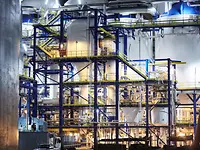
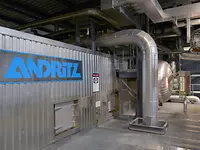
ANDRITZ offers a full line of systems for chloride and potassium removal from precipitator ash.
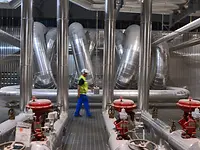
ANDRITZ recovery plant service experts work in close cooperation with you to improve the performance, stability, availability, and efficiency of your recovery boilers and auxiliary equipments.

With over 120 years of experience and a strong global presence, US headquartered Diamond Power brings deep expertise in advanced boiler cleaning technologies and services. These solutions are widely used across the pulp & paper, utility, biomass, waste-to-energy, and industrial sectors.